A cutting board is more than just a kitchen tool; it’s the foundation of countless culinary creations. For those who demand the best, a John Boos maple cutting board stands as a testament to quality, durability, and timeless design. Renowned by professional chefs and home cooks alike, these boards are an investment that, with proper care, can last a lifetime. This comprehensive guide will explore the unique advantages of John Boos maple cutting boards, provide essential maintenance tips, and help you understand why they are a superior choice for your kitchen.
Understanding John Boos Maple Cutting Boards
John Boos & Co. has been crafting fine wood products since 1887, establishing a legacy of excellence in butcher blocks and cutting boards. Their maple cutting boards are particularly celebrated for their superior performance and aesthetic appeal.
Types of Wood Cutting Boards
While various materials are used for cutting boards, maple wood, especially Northern Hard Rock Maple used by John Boos, offers distinct benefits.
-
Maple Wood (John Boos): Crafted from robust Northern Hard Rock Maple, John Boos boards are prized for their exceptional hardness, resilience, and dense grain. This makes them highly durable, capable of withstanding years of rigorous chopping and slicing. Importantly, maple is softer than knife steel, meaning it keeps your blades sharper for longer compared to harder surfaces. With appropriate care, the natural properties of wood contribute to a more hygienic surface than many might assume. The brand offers various constructions:
- Edge Grain: This is the most common construction, where strips of wood are glued together with the long grains running parallel to the cutting surface. Edge grain boards are very sturdy and durable, ideal for everyday chopping and slicing tasks. Many John Boos “Chop-N-Slice” and “R-Board” series feature edge grain construction, offering reversibility and sometimes juice grooves.
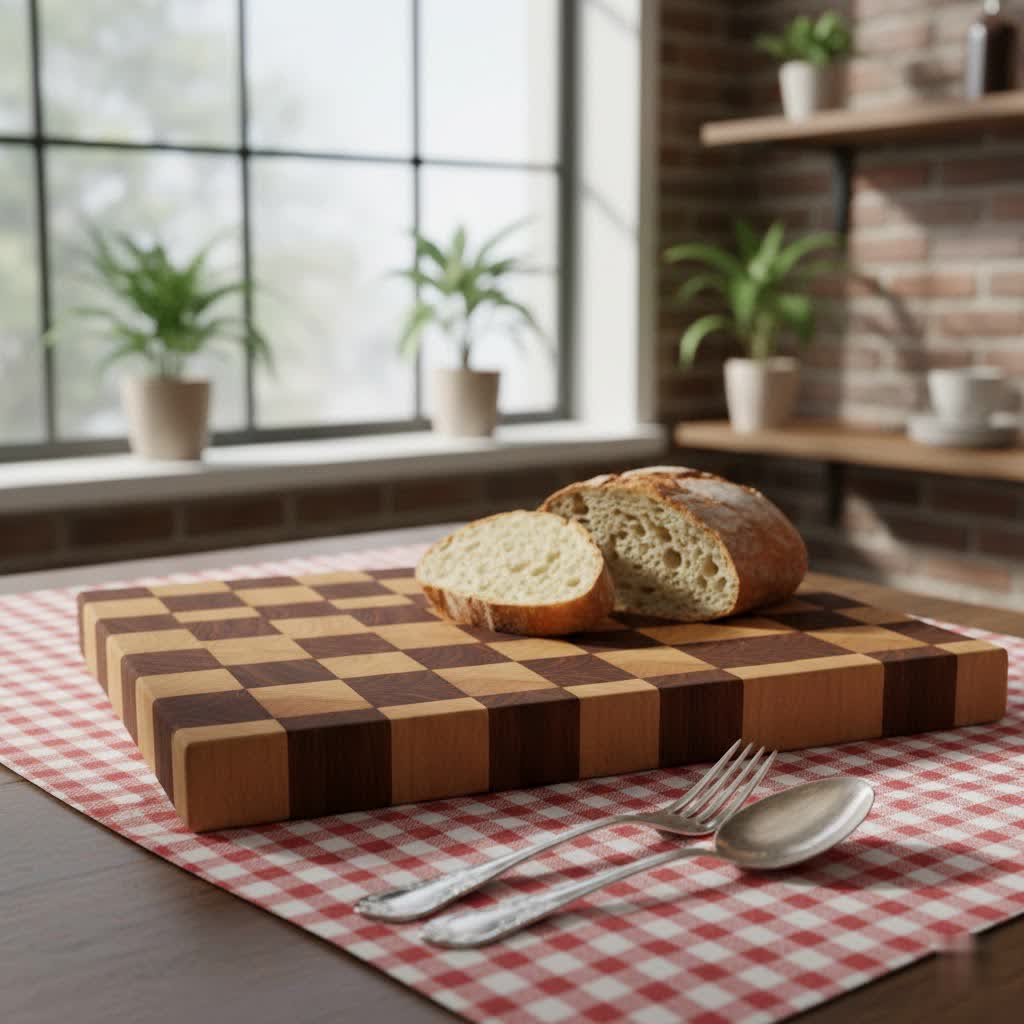
- End Grain: In end grain construction, the wood fibers are oriented vertically, like the ends of a tree trunk. When a knife cuts into an end grain board, the blade goes between the fibers rather than cutting across them. This “self-healing” property is gentler on knife edges, helps prevent deep gouges, and makes end grain boards exceptionally resistant to knife marks. End grain boards are often thicker, adding significant weight and stability, and exhibit a beautiful checkerboard pattern with varied light and dark tones. John Boos “Butcher Blocks” and some “Chopping Blocks” exemplify this premium construction.
- Common Series & Features: John Boos offers a wide array of maple cutting boards tailored for different needs. From the versatile “Chop-N-Slice” series with thicknesses ranging from 1″ to 1.25″, to the heavier “RA-Board” series at 2.25″ thick, and specialty “BBQ” and “Carving” boards often equipped with deep juice grooves and pyramid designs to stabilize meat. Many boards are reversible, providing two distinct cutting surfaces, and some feature recessed finger grips or integrated handles for easier transport. NSF certified models are also available, ensuring commercial-grade sanitation and durability.
-
Other Wood Types: While maple is a top choice, other woods like teak and walnut are also used for cutting boards. Teak is known for its high oil content and water resistance, while walnut offers a darker aesthetic and similar knife-friendliness to maple.
-
Bamboo: Often marketed as eco-friendly, bamboo boards are typically harder than maple. This hardness can, however, be tougher on your knife edges, leading to quicker dulling. They can also be prone to splitting if not properly maintained.
-
Plastic: Inexpensive and dishwasher-safe, plastic boards are common. However, they can develop deep knife grooves where bacteria can harbor, even after washing. They also don’t offer the same knife-friendliness or aesthetic appeal as quality wood.
-
Glass: Though easy to clean and heat-resistant, glass cutting boards are extremely hard. They will rapidly dull and even damage your knife edges, making them a poor choice for serious cooking.
|
Our Picks for the Best Cutting Board in 2026
As an Amazon Associate I earn from qualifying purchases.
|
||
| Num | Product | Action |
|---|---|---|
| 1 | Bamboo Cutting Boards for Kitchen, Extra Large Wood Cutting Board with Deep Juice Groove and Handle Heavy Duty Chopping board, Kikcoin, 17.6" x 12" |

|
| 2 | Checkered Acacia Wood Cutting Board for Kitchen – Wooden Chopping Board, Durable Checkered Charcuterie Board for Meat, Fruit, Cheese & Vegetables, 16" x 11" x 1" |
|
| 3 | Bamboo Cutting Board for Kitchen Meal Prep & Serving, 3-Piece Wooden Set with Juice Grooves, Side Handles, Non-Slip Mats – Ideal for Meat, Veggies, Fruit – Ideal Gift for the Home |
|
| 4 | Extra Large Cutting Boards, Plastic Cutting Boards for Kitchen (Set of 3) Cutting Board Set Dishwasher Chopping Board with Juice Grooves Easy-Grip Handles, Dark Grey, Empune |
|
| 5 | Bamboo Cutting Boards for Kitchen [Set of 3] Wood Cutting Board for Chopping Meat, Vegetables, Fruits, Cheese, Knife Friendly Serving Tray with Handles |
|
| 6 | Titanium Cutting Board for Kitchen, Cutting Board Double Sided Food Grade, Pure Titanium/PP, Easy to Clean Large Size 16”×11” |
|
| 7 | GORILLA GRIP BPA-Free Reversible Kitchen Cutting Board Set of 3, US Designed, Nonporous, Juice Grooves Catch Liquid, Slip Resistant Border, Dishwasher Safe, Durable Large Food Chopping Boards, Black |
|
| 8 | Kikcoin Extra Large Bamboo Cutting Boards, (Set of 3) Chopping Boards with Juice Groove Bamboo Wood Cutting Board Set Butcher Block for Kitchen, End Grain Serving Tray |
|
| 9 | Acacia Wood Cutting Board with Handle, 16x8 Inch Large Kitchen Chopping Board for Meat and Cheese, Butcher Block Serving Tray for Charcuterie, Bread and Fruit |
|
| 10 | Keechee Bamboo Cutting Board, Durable Wood Cutting Boards for Kitchen with Deep Juice Grooves & Built-in Handles, Ideal Charcuterie & Chopping for Meat, Vegetables and Fruits Ideal Kitchen Gifts |
|
Essential Care for Your John Boos Maple Board
The longevity and beauty of your John Boos maple cutting board depend heavily on consistent and correct care. Neglecting maintenance can lead to warping, cracking, and a significantly shortened lifespan.
Initial Treatment and Regular Maintenance
Before its first use, and as a routine thereafter, your John Boos board requires oiling and conditioning.
- Initial Treatment: When you first unbox your John Boos board, generously apply John Boos Mystery Oil to all surfaces. Continue applying until the wood stops absorbing the oil, indicating full saturation. This step is vital to hydrate and protect the wood.
- Conditioning: After the oil has soaked in (ideally overnight), apply a layer of John Boos Board Cream. This cream, a blend of natural waxes and oils, seals in the moisture provided by the Mystery Oil, creating a protective barrier against water and food particles.
- Regular Maintenance: For boards used daily, monthly maintenance is ideal. If used less frequently, every two to three months may suffice. However, always monitor the wood; if it appears dry or dull, it’s time for a treatment. The process is the same: liberal application of Mystery Oil, allowing it to penetrate overnight, followed by Board Cream.
Cleaning and Storage Best Practices
Proper cleaning and storage are just as critical as oiling.
- Daily Cleaning: After each use, hand wash your board with warm water and a mild dish detergent. Gently scrub the surface to remove all food debris. Rinse thoroughly, then immediately dry the board with a clean towel.
- Drying and Storage: Never allow liquids to sit on the board for extended periods, and never soak your cutting board in water. After drying with a towel, allow the board to air dry completely by standing it on its edge in a dry, well-ventilventilated area. Storing it flat can trap moisture and lead to warping.
- Deep Cleaning: For stubborn stains or odors, sprinkle coarse salt over the board and rub it in with half a lemon. Let it sit for 5-10 minutes before rinsing and drying. For sanitization, a solution of one part vinegar to two parts water can be used, wiping the surface gently before thoroughly drying and re-oiling.
- Things to Avoid:
- Dishwasher: The high heat and prolonged exposure to water in a dishwasher will severely damage and warp wooden boards.
- Harsh Chemicals: Bleach or strong chemical cleaners can strip the wood of its natural oils and potentially contaminate food.
- Hot Pads: Do not use your board as a hot pad for hot pots and pans, as thermal shock can cause cracking.
- Uneven Cutting: Distribute your cutting across the entire surface to ensure even wear and prevent specific areas from hollowing out prematurely.
Addressing Wear and Tear
Even with the best care, knife marks are inevitable. For minor scratches, a light sanding with fine-grit sandpaper can refresh the surface, followed immediately by thorough oiling and conditioning to restore protection.
John Boos Maple vs. Other Materials: A Comparison
Choosing a cutting board often comes down to balancing several factors. Here’s how John Boos maple stacks up against common alternatives:
| Feature | John Boos Maple Wood | Plastic | Bamboo | Glass |
|---|---|---|---|---|
| Durability | Excellent; very long-lasting with care. | Good; can warp/degrade over time. | Good; can split if not maintained. | Excellent; but brittle. |
| Knife-Friendly | Excellent; preserves knife edges. | Fair; can create deep grooves. | Poor; very hard, dulls knives. | Very Poor; severely dulls/damages knives. |
| Hygiene | Excellent (with proper cleaning/oiling). | Fair; grooves harbor bacteria. | Good. | Excellent; non-porous. |
| Maintenance | High; regular oiling/conditioning. | Low; dishwasher safe. | Moderate; requires oiling. | Low; dishwasher safe. |
| Aesthetics | High; natural, professional look. | Low; utilitarian. | Moderate; distinct grain. | Low; can look cheap. |
| Cost | High (initial investment). | Low. | Low to Moderate. | Low. |
- Recommendation: For serious home cooks and professionals, a John Boos maple board is the optimal choice for its superior knife care and longevity. Plastic boards can be useful for raw meat (if dedicated and frequently replaced) due to easy sanitization, but not ideal for knife edges. Bamboo and glass are generally not recommended for primary cutting tasks due to their impact on knives.
Your Guide to Choosing the Perfect John Boos Maple Cutting Board
Selecting the right John Boos board involves considering your specific kitchen habits and needs.
Determine Your Culinary Needs
- Usage: Will you be primarily chopping vegetables, carving meats, or preparing pastries? Boards with juice grooves are excellent for meats, while flat surfaces are versatile for all tasks. Some specific designs, like the Newton Prep Master, offer multiple surfaces with integrated features.
- Size & Kitchen Space: John Boos boards come in a vast range of sizes. Consider your counter space and storage availability. Larger boards (20×15 inches or more) provide ample workspace but can be heavy.
- Budget: John Boos boards are an investment. While they are a higher upfront cost, their longevity often makes them more economical than repeatedly replacing cheaper boards.
Understanding Construction & Features
- Edge Grain vs. End Grain: If knife preservation is your top priority and you’re willing to invest more, an end grain board is superior. For excellent all-around performance at a slightly lower price point, an edge grain board is a fantastic choice.
- Thickness: Thicker boards (1.5″ and up) offer greater stability and are generally more durable, resisting warping better. Thinner boards (1″ or 1.25″) are lighter and easier to move.
- Juice Grooves: If you frequently carve roasts or juicy fruits, a board with a juice groove is a practical feature to prevent spills. Many reversible boards offer a groove on one side and a flat surface on the other.
- Feet/Handles: Some boards come with integrated feet for stability or recessed finger grips/metal handles for easier lifting and transport.
Why Invest in John Boos
John Boos has earned its reputation through generations of quality craftsmanship. When you purchase a John Boos maple cutting board, you’re investing in:
- Unmatched Durability: Built to withstand the rigors of daily use in busy kitchens.
- Superior Knife Care: The ideal surface for protecting and prolonging the sharpness of your knives.
- Hygienic Surface: With proper care, wood is naturally resistant to bacteria.
- Timeless Aesthetic: A beautiful addition to any kitchen, often serving as a centerpiece.
- Brand Trust: Endorsed by countless professional chefs and culinary institutions worldwide.
Important Usage and Storage Tips
To reiterate, maximize your board’s lifespan:
- Clean, oil, and cream your board regularly.
- Never let liquids pool or soak into the wood.
- Store your board standing upright in a dry, well-ventilated space.
Conclusion
A John Boos maple cutting board is more than just a surface for food preparation; it’s a culinary partner that elevates your kitchen experience. By understanding the superior qualities of Northern Hard Rock Maple and committing to a routine of careful maintenance, you ensure that this investment delivers unmatched performance and lasting beauty for decades to come. With its blend of durability, knife-friendliness, and classic aesthetic, a John Boos maple cutting board truly is a cornerstone of a well-equipped kitchen.
Are you ready to experience the difference a premium John Boos maple cutting board can make in your daily cooking?
Frequently Asked Questions
Is a John Boos maple cutting board worth the investment?
Yes, a John Boos maple cutting board is generally considered a worthwhile investment due to its exceptional durability, knife-friendly surface, and aesthetic appeal. With proper care, these boards can last for many years, often outperforming and outlasting cheaper alternatives, making them a cost-effective choice in the long run for serious cooks.
How often should I oil my John Boos maple board?
For daily users, it’s recommended to oil your John Boos maple board monthly using John Boos Mystery Oil, followed by Board Cream. For less frequent use, every two to three months may suffice. The key is to monitor the wood; if it starts to look dry or dull, it’s time for a re-treatment to prevent cracking and warping.
Can I put my John Boos board in the dishwasher?
Absolutely not. Placing a John Boos maple cutting board in the dishwasher will expose it to extreme heat and prolonged soaking, which will inevitably lead to warping, cracking, and irreparable damage. Always hand wash your board with warm water and mild soap, then dry it immediately and thoroughly.
What’s the difference between edge grain and end grain construction?
Edge grain boards have wood strips glued together with the grain running parallel to the surface, offering good durability. End grain boards have wood fibers oriented vertically, allowing knife blades to go between the fibers. This makes end grain boards superior for knife preservation and self-healing, as they show fewer knife marks over time.
