Every kitchen relies on a trusty cutting board, yet the choice of material can dramatically impact your cooking experience, knife longevity, and even food safety. While various options abound, wood stands out as a time-honored favorite for good reason. But with so many types of wood available, how do you choose the best cutting board wood for your needs? This comprehensive guide will explore the leading wood varieties, compare them to other common materials, and provide essential tips to help you select and maintain the perfect board for your culinary adventures.
Common Types of Cutting Board Materials
Understanding the fundamental characteristics of popular cutting board materials is the first step toward making an informed choice. Each offers a unique blend of advantages and disadvantages.
Wood Cutting Boards
Wood cutting boards are cherished for their natural beauty, durability, and knife-friendly surfaces. Their inherent properties make them a top choice for many home cooks and professional chefs.
-
Advantages and Disadvantages of Wood
Wood boards are generally gentle on knife edges, helping to keep your blades sharper for longer. Many hardwoods possess natural antimicrobial properties, and studies suggest that bacteria tend to die off faster on well-maintained wooden surfaces than on plastic. However, wood requires consistent care, including regular oiling, to prevent drying, cracking, and warping. They can also be heavier and more expensive than some alternatives. -
Hard Maple
Often considered the gold standard for cutting boards, hard maple boasts a tight, closed-grain structure and a high Janka hardness rating of around 1450 pounds-force (lbf). This makes it incredibly durable, resisting scratches and dents while being exceptionally kind to your knives. Its light color makes it easy to spot when cleaning is needed, and its low porosity helps prevent moisture absorption and bacterial growth. Maple is widely approved for commercial food preparation surfaces due to its superior hygiene and longevity. -
Black Walnut
With a Janka hardness rating of approximately 1010 lbf, black walnut is softer than maple, making it even gentler on your precious knife edges. Its rich, dark tones offer a luxurious aesthetic that can enhance any kitchen. Walnut is naturally stain-resistant and contains juglone, a natural antimicrobial compound. While beautiful, walnut boards typically require more frequent oiling than harder woods to maintain their moisture resistance and prevent cracking. They may also show knife marks more readily than maple. -
Cherry Wood
Cherry wood, with a Janka hardness of around 950 lbf, presents a beautiful, slightly softer alternative to maple. It is gentle on knives, offers adequate durability for most kitchen tasks, and develops a rich patina over time. Cherry’s warm reddish-brown hue adds a classic touch to your countertop. Like other hardwoods, cherry wood benefits from consistent care to maintain its integrity and appearance. Its natural tannins also contribute to its antimicrobial properties. -
Teak Wood
Teak, often sourced from Southeast Asia, is celebrated for its natural oils, which give it exceptional resistance to moisture, warping, and bacterial growth. With a Janka hardness of about 1070 lbf, it strikes a good balance between durability and knife-friendliness. However, some debate exists regarding teak’s silica content, which some experts suggest can dull knives slightly faster than maple or walnut. Teak boards are typically heavier and often more expensive, but their striking appearance and low maintenance requirements (though still needing regular oiling) make them a popular choice.
|
Our Picks for the Best Cutting Board in 2026
As an Amazon Associate I earn from qualifying purchases.
|
||
| Num | Product | Action |
|---|---|---|
| 1 | Kikcoin Extra Large Bamboo Cutting Boards, (Set of 3) Chopping Boards with Juice Groove Bamboo Wood Cutting Board Set Butcher Block for Kitchen, End Grain Serving Tray |

|
| 2 | Bamboo Cutting Boards for Kitchen, Extra Large Wood Cutting Board with Deep Juice Groove and Handle Heavy Duty Chopping board, Kikcoin, 17.6" x 12" |
|
| 3 | Keechee Bamboo Cutting Board, Durable Wood Cutting Boards for Kitchen with Deep Juice Grooves & Built-in Handles, Ideal Charcuterie & Chopping for Meat, Vegetables and Fruits Ideal Kitchen Gifts |
|
| 4 | Acacia Wood Cutting Board with Handle, 16x8 Inch Large Kitchen Chopping Board for Meat and Cheese, Butcher Block Serving Tray for Charcuterie, Bread and Fruit |
|
| 5 | Titanium Cutting Board for Kitchen, Cutting Board Double Sided Food Grade, Pure Titanium/PP, Easy to Clean Large Size 16”×11” |
|
| 6 | Extra Large Cutting Boards, Plastic Cutting Boards for Kitchen (Set of 3) Cutting Board Set Dishwasher Chopping Board with Juice Grooves Easy-Grip Handles, Dark Grey, Empune |
|
| 7 | Bamboo Cutting Board for Kitchen Meal Prep & Serving, 3-Piece Wooden Set with Juice Grooves, Side Handles, Non-Slip Mats – Ideal for Meat, Veggies, Fruit – Ideal Gift for the Home |
|
| 8 | GORILLA GRIP BPA-Free Reversible Kitchen Cutting Board Set of 3, US Designed, Nonporous, Juice Grooves Catch Liquid, Slip Resistant Border, Dishwasher Safe, Durable Large Food Chopping Boards, Black |
|
| 9 | Checkered Acacia Wood Cutting Board for Kitchen – Wooden Chopping Board, Durable Checkered Charcuterie Board for Meat, Fruit, Cheese & Vegetables, 16" x 11" x 1" |
|
| 10 | Bamboo Cutting Boards for Kitchen [Set of 3] Wood Cutting Board for Chopping Meat, Vegetables, Fruits, Cheese, Knife Friendly Serving Tray with Handles |
|
Plastic Cutting Boards
Plastic cutting boards are a common sight in kitchens due to their affordability and initial ease of cleaning. Typically made from high-density polyethylene (HDPE) or polypropylene (PP), they are non-porous when new and can often be disinfected in a dishwasher. However, a significant drawback arises as plastic boards accumulate deep knife grooves over time. These grooves are difficult to clean thoroughly and can harbor bacteria, increasing the risk of cross-contamination. Furthermore, studies indicate that plastic cutting boards can shed microplastic particles into food, raising concerns about potential health impacts. It’s crucial to replace plastic boards once they show significant wear or deep scarring.
Bamboo Cutting Boards
Often marketed as an eco-friendly alternative, bamboo is technically a grass, not wood. It grows rapidly, making it a sustainable resource. Bamboo boards are lightweight, generally affordable, and can be quite durable. However, their high silica content makes them considerably harder on knife edges than traditional wood, leading to faster dulling. Lower-quality bamboo boards, which are often made from laminated strips held together with adhesives, can also be prone to splintering or delaminating over time. While bamboo’s density can offer some resistance to moisture, its porosity can vary, and proper sanitation is still essential.
Glass Cutting Boards
Glass cutting boards offer a sleek, modern aesthetic and are highly hygienic due to their completely non-porous surface, which prevents the absorption of odors, liquids, and bacteria. They are also heat-resistant, often doubling as trivets for hot pots and pans. However, glass is notoriously harsh on knives, dulling blades quickly with repeated use. It can also be a slippery and noisy surface for chopping, and there’s always the risk of shattering if dropped, posing a safety hazard. For these reasons, glass boards are typically best reserved for serving or light, non-cutting tasks.
Comparison Table: Wood vs. Other Materials
Choosing the right cutting board involves balancing various factors. Here’s a quick comparison to highlight the key differences:
| Feature | Wood (Maple/Walnut) | Plastic (HDPE/PP) | Bamboo | Glass |
|---|---|---|---|---|
| Durability | Excellent (long-lasting with care) | Moderate (grooves wear out over time) | Good (can splinter/delaminate if low quality) | Excellent (scratch-resistant, but can shatter) |
| Knife-Friendliness | Excellent (preserves blade edges) | Fair (dulls knives over time) | Poor (very hard, dulls knives quickly) | Very Poor (rapidly dulls and damages knives) |
| Hygiene | Excellent (natural antimicrobial, requires care) | Good when new, Poor when grooved (harbors bacteria) | Moderate (porosity varies, can splinter) | Excellent (non-porous, very easy to clean) |
| Aesthetics | High (natural beauty, rich grains) | Low to Moderate (utilitarian) | Moderate (natural, but can look “glued”) | High (sleek, modern, decorative) |
| Cost | Moderate to High | Low to Moderate | Low to Moderate | Low to Moderate |
| Maintenance | High (oiling, handwashing, drying) | Moderate (dishwasher safe, but needs frequent replacement) | Moderate (oiling recommended, handwash) | Low (dishwasher safe, easy wipe-down) |
| Best Use Cases | All-purpose, heavy chopping, meat, vegetables, bread | Separate boards for meat/produce (when new), lighter tasks | Light chopping, decorative, specific food prep (e.g., bread) | Serving, non-cutting tasks, heat-resistant trivet |
How to Choose the Right Cutting Board Wood
Selecting the ideal cutting board wood for your kitchen involves personal preference, cooking habits, and an understanding of material properties.
Determine Your Needs
Start by considering how you’ll use your board most often.
- What will you be cutting? If you primarily chop vegetables, a moderately hard wood like cherry or walnut is excellent. For heavy-duty meat preparation, a robust hard maple board might be preferable.
- What size do you need? Consider your counter space and storage. Larger boards (15×20 inches or more) are great for big tasks but can be heavy to move and wash. Smaller boards are convenient for quick prep.
- What’s your budget? While good wood cutting boards are an investment, options exist across various price points. Maple often offers excellent value, while exotic woods or large, end-grain designs can be pricier.
Material Matters
Beyond simply choosing “wood,” consider the specifics:
- Janka Hardness: Aim for woods within the 900-1500 lbf range to balance durability and knife preservation. Woods too hard will dull knives, while those too soft will scar easily.
- Grain Structure: Opt for hardwoods with tight, closed grain, such as maple, walnut, or cherry. These resist moisture penetration and bacterial growth better than open-grain woods.
- End-Grain vs. Edge-Grain:
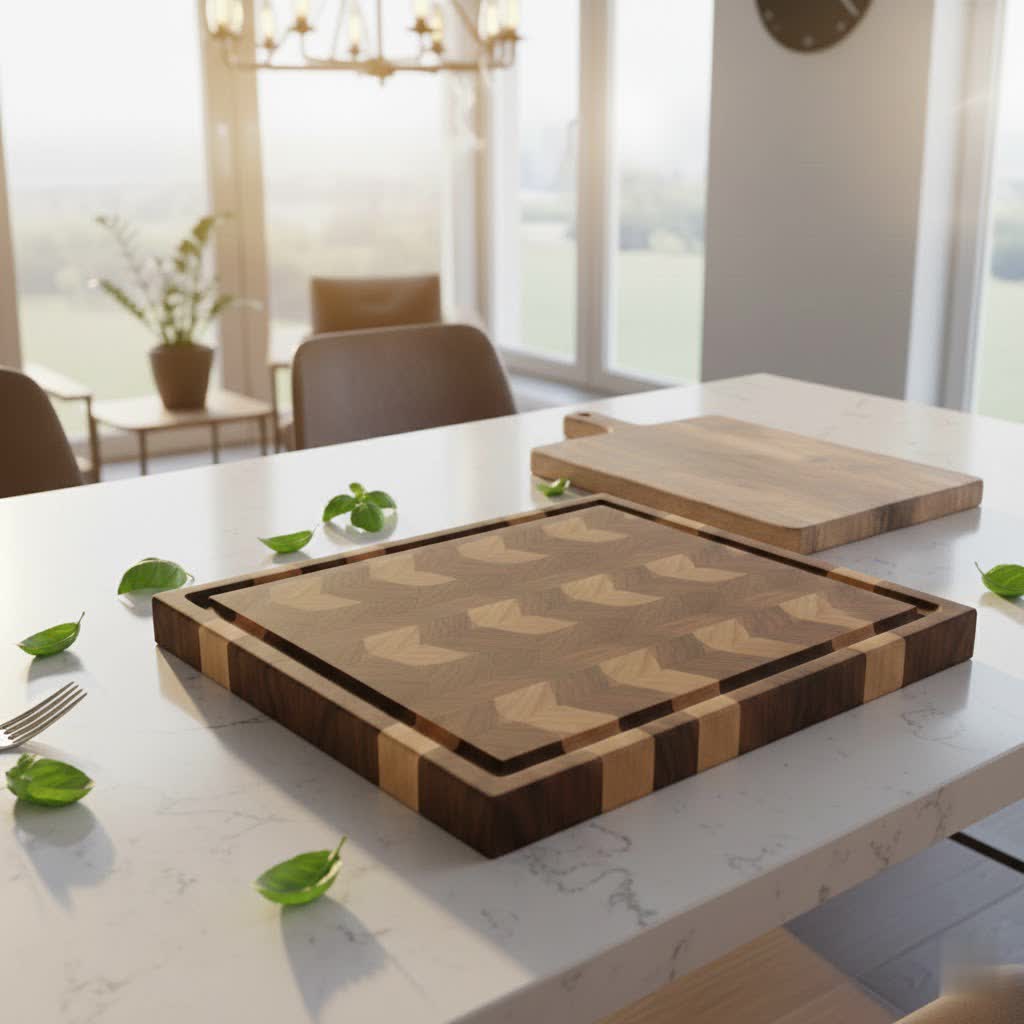
- End-grain boards are constructed with the wood fibers oriented vertically, like bristles. This “self-healing” surface allows knife blades to slide between the fibers, preserving knife edges and showing fewer cut marks. They are more durable and shock-absorbent but generally more expensive and require more careful manufacturing.
- Edge-grain boards have wood fibers running horizontally. They are typically more affordable, lighter, and easier to produce, but knives cut across the fibers, which can dull blades faster and leave more visible marks.
- Food Safety: Ensure the wood is food-safe and free from toxic finishes or glues. Reputable manufacturers will use food-grade adhesives and finishes.
Brand and Price
Investing in a cutting board from a reputable brand ensures quality craftsmanship, appropriate wood selection, and food-safe construction. While higher prices often reflect superior materials and construction (like end-grain designs), there are many excellent, reasonably priced options available. Read reviews and consider the brand’s commitment to sustainability and ethical sourcing. A good wood cutting board is a long-term investment that, with proper care, can last for decades.
Essential Usage and Maintenance Tips
Proper care is paramount for extending the life and maintaining the hygiene of your wood cutting board.
- Clean Immediately After Use: Wash your board with hot, soapy water. Use a scrub brush to dislodge food particles.
- Avoid Soaking and Dishwashers: Never immerse your wooden board in water or put it in a dishwasher, as this can lead to warping, cracking, and bacterial growth.
- Dry Thoroughly: After washing, immediately wipe the board dry with a clean cloth and allow it to air dry completely by standing it on its edge to promote air circulation on all sides.
- Regular Oiling: Condition your board regularly (every few weeks, or when it looks dry) with food-grade mineral oil or beeswax conditioner. This prevents the wood from drying out, cracking, and absorbing excess moisture and odors.
- Sanitize Periodically: For deeper sanitization, you can wipe the board with white vinegar or a diluted bleach solution (one tablespoon of bleach per gallon of water), then rinse and dry thoroughly.
- Use Separate Boards: To prevent cross-contamination, always use separate cutting boards for raw meats, poultry, and seafood, and another for produce, bread, and ready-to-eat foods.
Conclusion
Choosing the Good Cutting Board Wood for your kitchen is more than just a purchase; it’s an investment in your culinary efficiency, knife care, and food safety. While alternatives like plastic, bamboo, and glass have their places, the timeless appeal and superior performance of quality hardwood boards—especially those crafted from hard maple, black walnut, or cherry—remain unmatched for most cooking tasks. By understanding the unique properties of different wood types, considering your specific needs, and committing to proper maintenance, you can select a board that not only performs exceptionally but also becomes a cherished centerpiece of your kitchen for years to come. What wood will you choose to elevate your cooking experience?
Frequently Asked Questions
Is a hardwood cutting board better than plastic?
Yes, in many ways, hardwood cutting boards are often considered superior to plastic. Hardwoods are gentler on knives, which helps maintain sharpness, and studies have shown that properly maintained wood can actually be more resistant to bacteria than plastic boards that develop deep, hard-to-clean grooves. Furthermore, plastic boards can release microplastics into food, a concern not associated with wood.
What is the best wood for knife longevity?
For optimal knife longevity, woods like black walnut and cherry are excellent choices. They are softer than hard maple but still durable enough for daily use. Their relative softness allows the knife edge to sink slightly into the wood fibers, rather than hitting a hard, unyielding surface, thereby preserving the blade’s sharpness over time. End-grain boards, regardless of wood type, are also inherently more knife-friendly than edge-grain.
How often should I oil my wooden cutting board?
The frequency of oiling depends on how often you use and wash your board, as well as the climate. As a general rule, you should oil your wooden cutting board once every two to four weeks. However, a good indicator is when the wood starts to look dry, dull, or lighter in color. If water is quickly absorbed rather than beading on the surface, it’s definitely time to re-oil.
